
 Switch
 Homepage
 facebook
 IG
IG
 Other Hospital
 CMUH App

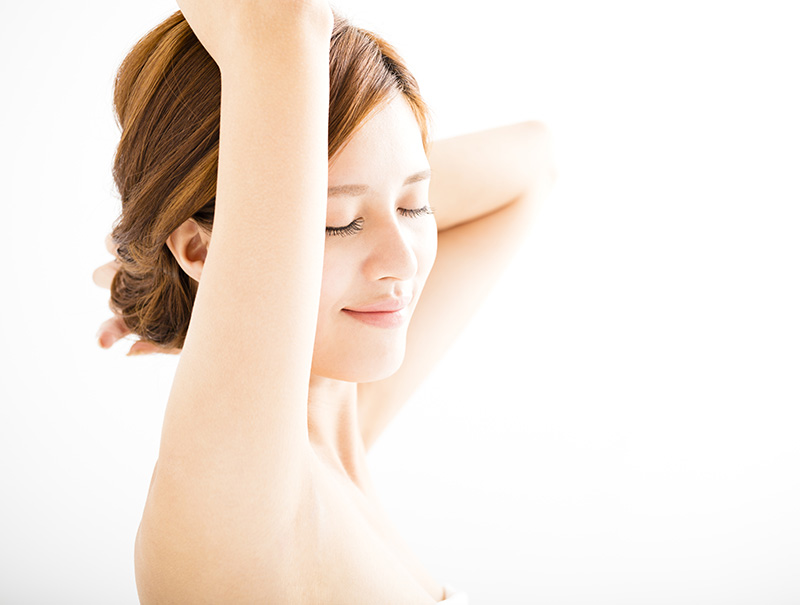
The human body has a special sweat gland called apocrine gland, also known as large sudoriferous gland, which is located at the bottom of the dermis and opens at the root of the body hair. It secretes sweat containing carbohydrates, proteins, pyruvic acid, etc., which is greasy and emulsified and easy to be decomposed by bacteria to form an unpleasant odor. For those who sweat more or are in adolescence susceptible to hormones and emotions, the apocrine glands produce more sweat, which smells worse.
The operation is to remove and reduce the number of apocrine glands as far as possible by scraping off subcutaneous apocrine glands with suction and a rotating scraper, so as to minimize its secretion and ease bromhidrosis. The operation is generally effective at 80 to 90 %. Due to differences in individual anatomy, the depth of gland distribution, and the healing process, a small number of patients may retain a residual scent or require supplemental treatment.
Adjunctive Therapy: Patients may choose to supplement the procedure with tissue glue or fibrin sealant to facilitate wound healing and minimize postoperative hematoma.
Pre-operative Precautions
- Please inform your doctor of your detailed allergy history, medical history, and current medications.
- Complete medical record review: No cardiovascular disease, kidney disease, diabetes, blood disorders, or other acute or chronic illnesses.
- If your doctor has prescribed pre-operative medications, please take or apply them as directed before surgery.
- If you are taking vitamin E, ginkgo, grape seed extract, or other health supplements, please stop taking them one week prior to surgery to reduce the chance of bleeding from the incision.
- On the day of surgery, please remove all valuable jewelry, metal objects, and contact lenses, and bring your "Outpatient Surgery Appointment Notice" to the operating room.
Notes after surgery
- Smoking, drinking alcohol and eating stimulating food should be avoided as they are detrimental to wound healing.
- The wound at the surgical site is compressed with elastic gauze to prevent swelling and blood stasis, so that the skin can adhere and recover after operation. Do not take off the elastic gauze, if it is too tight and feel uncomfortable, you can ask your family to help loosen it and tie it again after some time.
- Shoulder movement should be limited after operation: Do not lift your hands over your shoulders, do not lift heavy objects, do not hold the bus ring, don't support your body vigorously when you are to sit up from bed. Activities below the elbow such as eating, face washing and writing are not restricted.
- Taking a shower is allowed following 3 days of a sponge bath after the operation. Keep the wound dry, and apply ointment after gently cleaning the wound with normal saline solution.
- It is advisable to wear button-down shirts and keep the arms slightly bent to prevent excessive underarm clamping and abrasion of wounds.
- Avoid strenuous exercise and lifting heavy stuff for 4 weeks after surgery.
- The axillary hair is reduced by 60 - 80% after operation.
- Regular living habits: Get plenty of rest after surgery. Avoid lifting heavy stuff or strenuous exercise to reduce bleeding.
- Wound healing may take 1 to 2 weeks, and scar care after stitches are removed is very important. Continuous massage is needed for about 3 to 6 months after removal of stitches to reduce scars and ease tight, prickly feeling.
If you have any questions please do not hesitate to contact us.
- (04)2205-2121 ext. 12020, 12021, Business Hour: Monday through Friday 08:00am-6:00pm, Saturday 08:00am-12:00pm, our center located at 11F, CMU Children’s Hospital.
 Facebook
 IG
IG
 YouTube